And we complained about the strikes. Here we sit, confined to quarters. Can't get out of the country for 10 more days. No one allowed out and about unless on the way to or from work (and that's not many) or the grocery store. All shops and restaurants closed. The street is eerily quiet, except for the violinist across the way. Thank heaven "Mozart" upstairs is leaving the piano alone, but why is anyone's guess.
At the store, only a few people are allowed in at one time. The dried pasta shelf is almost empty along with the pasta sauce shelf, and the canned goods department. Toilet paper? Nope. None.
People are cleaning house to keep themselves busy...we can hear the vacuums and mops going. Ah! He's playing a Viennese waltz! Others are wandering about on their balconies. After all, it's 68 degrees and sunny. What a day for the beach.
All went well until the Italians locked down Milan. Nice countered by canceling the rest of Carnaval. Then, a pause before the rapid changes. EU borders closed, airline and train schedules disrupted, restaurants closed (every one that could go into the carryout business, did), the mall closed, Terminal 1 at the airport shut down, and finally the announcement that we're all grounded.
Oh, good God, there goes Mozart.
We've gotten into some pretty interesting situations on our travels. This is one of them. Best we can do is hope that the airline keeps flying cargo from Copenhagen to Chicago, with a few passengers on board, until we can get back to the States. But, then, what awaits us there? Fisticuffs at the Costco, a tanked stock market, elections on the horizon, the income taxes are still due, and we'd bet that there's no toilet paper.
Sorry, no pictures...
Thursday, March 19, 2020
Monday, March 2, 2020
Nice 2020, Part 1
First, let us say that French strikes stink. One of the first words you learn upon visiting France is "greve", which means "strike". It's almost as important as "bonjour". At the beginning of this trip, the unions were all up at arms about pension reform in France and had been since November. This translated into one or two strikes each week, consisting of complete shutdowns of the transport systems. No tram, no bus, no train, no get anywhere. Plenty of traffic jams, though. This went on until the proposed law went to the assembly. In American terms, the bill went to the house for debate. At that point, mid-February, all the strikes stopped, supposedly until March 31. Good. We could use a break.
So, on a non-strike day, we went over to Monaco to see the circus animals. This year was Monaco's year of the horse, and there were plenty of them.


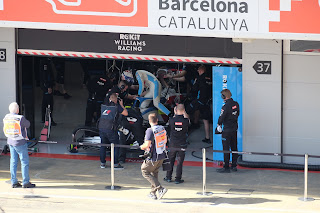
We skipped Rally this year. We don't get enough coverage either here or in the states to know who's who anymore. Don't worry, F1's coming up. And speaking of which, off to Barcelona we went to watch the annual testing, with excellent weather. Formula 1 has shortened the number of testing days, so there was plenty of track action.


And somehow, the new management has persuaded the teams that hiding behind the blinds in the garages was no longer to their liking, so the garages were open and visible most of the time. One could even see the occasional driver! Big improvement for the fans.


Back to Nice and it was Carnaval time. This year's theme was "King of Fashion". Lots and lots of Karl Lagerfeld.


We were excited when one news source stated that the burning of the King was moving back to the sea, to be accompanied by fireworks, like it was before the tragedy of July 2016. Other sources did not support that, and the official program said nothing about any of it. We were wondering whether to walk down to the water on March 1 to see what, if anything, was going to happen. Our fine Mayor Estrosi (I mean that literally. No joking. This guy is great.) made up our minds for us by cancelling the rest of the festivities due to the Coronavirus fears. Guess he wanted to keep any infected Italians on their side of the border. In the end, the king was burned at Place Massena in an unusual situation, because the grandstands had already been taken down. So what do you do with all the flowers when you have cancelled not one, but two Bataille des Fleurs (flower parades)? Some went to the war memorials, some to the cemeteries, some to the hospitals, and the rest to the people on the street:

The city employees were having a blast distributing the mimosas. We hear that next year's theme is King of Animals. Lions, and tigers, and bears, oh my.
So, on a non-strike day, we went over to Monaco to see the circus animals. This year was Monaco's year of the horse, and there were plenty of them.


We skipped Rally this year. We don't get enough coverage either here or in the states to know who's who anymore. Don't worry, F1's coming up. And speaking of which, off to Barcelona we went to watch the annual testing, with excellent weather. Formula 1 has shortened the number of testing days, so there was plenty of track action.


And somehow, the new management has persuaded the teams that hiding behind the blinds in the garages was no longer to their liking, so the garages were open and visible most of the time. One could even see the occasional driver! Big improvement for the fans.


Back to Nice and it was Carnaval time. This year's theme was "King of Fashion". Lots and lots of Karl Lagerfeld.


We were excited when one news source stated that the burning of the King was moving back to the sea, to be accompanied by fireworks, like it was before the tragedy of July 2016. Other sources did not support that, and the official program said nothing about any of it. We were wondering whether to walk down to the water on March 1 to see what, if anything, was going to happen. Our fine Mayor Estrosi (I mean that literally. No joking. This guy is great.) made up our minds for us by cancelling the rest of the festivities due to the Coronavirus fears. Guess he wanted to keep any infected Italians on their side of the border. In the end, the king was burned at Place Massena in an unusual situation, because the grandstands had already been taken down. So what do you do with all the flowers when you have cancelled not one, but two Bataille des Fleurs (flower parades)? Some went to the war memorials, some to the cemeteries, some to the hospitals, and the rest to the people on the street:

The city employees were having a blast distributing the mimosas. We hear that next year's theme is King of Animals. Lions, and tigers, and bears, oh my.

Tuesday, December 31, 2019
Iguazu Falls!
After disembarking the ship, we headed to the domestic airport for the flight to Cataratas del Iguazu International. Arriving there, it was off to the Iguazu National Park on the Argentine side. The falls are actually located right on the border between Argentina and Brazil, so there's a National Park and an airport in Brazil as well. This is the largest waterfall in the world. Its name comes from the native Guarani language and means "big water". No kidding!


Our first day's afternoon at the falls started with a Parilla (BBQ...yum!) lunch followed by a ride on the water. The tour description said "you will get wet". OK.

They issue you a life jacket, and then a big rubber bag to put your belongings in. Then they show you how to carefully seal up the bag. So, just how wet are we gonna get? Well, it turns out that "wet" doesn't exactly describe it. The description should say "you will get absolutely soaked to the bone". The boat drivers joyously drive right under the falls, and that water's coming down hard. The ride back to shore offers some really rough rapids that had everyone squealing. The rest of the afternoon was comfortably cool, though, as we all slowly dried out, while walking some of the pathways around the falls.


We spent the night at the Loi Suites Hotel (www.loisuites.com.ar) What a neat place! The several buildings are joined to the lobby by hanging bridges and everyone gets either a nice balcony or a room with a soaring ceiling. Having had both breakfast and lunch, we drank our dinner: martinis by the pool followed by a small bottle of local wine from the minibar.
Up the next morning and fed, we were off to our second day at the falls. First, we took a train ride to visit the Devil's Throat.

While we were there, Gordon did some bird watching. A flock of Grey Dusky Swifts. They live behind the various falls and are the logo for the park;

And a Plush Crested Jay:

Later, we walked more of the pathways to enjoy the breathtaking views. Look how tall some of these falls are!


More local wildlife...it's a Coati, he's got an ice cream wrapper and not one bit was going to get away from him!

Lunch was served at the Grand Melia Hotel. Parilla, of course, along with other gourmet goodies, and then we did some more birdwatching. This one's a Three Striped Flycatcher...he was looking for flies around the pool.

Soon we were off to the airport for the flight back to Buenos Aires. The city was in high form, because the following day was inauguration day for their new president and Comicon was at the convention center.
So, overall, we'd say this: go to Machu Picchu. Go to Iguazu Falls, it's one of the most impressive sights we've ever seen. Take a cruise. Drink Argentine wine. Eat Parilla. You won't regret it.


They issue you a life jacket, and then a big rubber bag to put your belongings in. Then they show you how to carefully seal up the bag. So, just how wet are we gonna get? Well, it turns out that "wet" doesn't exactly describe it. The description should say "you will get absolutely soaked to the bone". The boat drivers joyously drive right under the falls, and that water's coming down hard. The ride back to shore offers some really rough rapids that had everyone squealing. The rest of the afternoon was comfortably cool, though, as we all slowly dried out, while walking some of the pathways around the falls.


We spent the night at the Loi Suites Hotel (www.loisuites.com.ar) What a neat place! The several buildings are joined to the lobby by hanging bridges and everyone gets either a nice balcony or a room with a soaring ceiling. Having had both breakfast and lunch, we drank our dinner: martinis by the pool followed by a small bottle of local wine from the minibar.
Up the next morning and fed, we were off to our second day at the falls. First, we took a train ride to visit the Devil's Throat.

While we were there, Gordon did some bird watching. A flock of Grey Dusky Swifts. They live behind the various falls and are the logo for the park;

And a Plush Crested Jay:

Later, we walked more of the pathways to enjoy the breathtaking views. Look how tall some of these falls are!


More local wildlife...it's a Coati, he's got an ice cream wrapper and not one bit was going to get away from him!

Lunch was served at the Grand Melia Hotel. Parilla, of course, along with other gourmet goodies, and then we did some more birdwatching. This one's a Three Striped Flycatcher...he was looking for flies around the pool.

Soon we were off to the airport for the flight back to Buenos Aires. The city was in high form, because the following day was inauguration day for their new president and Comicon was at the convention center.
So, overall, we'd say this: go to Machu Picchu. Go to Iguazu Falls, it's one of the most impressive sights we've ever seen. Take a cruise. Drink Argentine wine. Eat Parilla. You won't regret it.
Saturday, December 28, 2019
Uruguay and Buenos Aires
We anchored at Punta Del Este, Uruguay and went ashore to have a look around. This was a pretty nice place with lots of high rise condos, restaurants, museums, and some very nice residential areas. Our tour took us around the peninsula...there is actually one intersection in town where you can see water in all directions! We stopped for photos at the Hanging Bridge:


Then we drove over it, twice. The second time, our bus driver went about as fast as he dared, laughing. You want to hear a bunch of geezers giggle? We visited some excellent viewpoints and passed the famous La Mano, on the beach.


Finally, a stop at a quaint little automobile museum that was installed in the basement garage of a former gas station. Nothing fancy here, but hey, we're car guys so we had to go.

And then onward to Montevideo, Uruguay. This is an upcoming urban area, again, condos, restaurants...reminded us of Florida.

We visited the local agricultural market and then the new Ferrando market, which is located in a former furniture factory on a residential back street, and given over to mostly gourmet goodies. We were hosted by the manager and treated to churros and fresh orange juice. Delicious. But then, our guide introduced us to the Uruguay/Argentina national tea, or rather, national habit. This is the famous "mate" or "yerba mate". What you do is put a whole bunch of this crushed up herb in a special, leather-covered cup, then add warm water to fill. A very special straw that resembles a perferated spoon is then inserted and handed, if to welcome someone, with the straw facing the individual who is to sip. The sipper, if uninitiated, then takes a small sip and says: "Yuck! This stuff is terrible!". And indeed it is. But it's like coffee to them, and they carry their mate setup around with them just like we drag our thermos of Starbucks all over the place.


Montevideo, for some reason, is home to a whole lot of shipwrecks. All sitting in the bay...

The final destination for this segment was Buenos Aires, Argentina. Here, we took the good old "highlights" tour to get the overview. A famous area of town is La Boca, originally settled by Italians. El Caminito Street is especially colorful.


Finally, no trip to Argentina could be complete without a visit to the Recoleta Cemetery. All above ground, although many of the tombs have basements where the caskets or urns are actually stored.

Here, we visit Evita Peron's grave. Our guide warned us not to be disappointed. You'd expect some fabulous gravesite, but in fact, she's entombed with the rest of her family Duarte. Still, the people love her and leave flowers and gifts, and there is always a line to pass by.


After disembarking the ship, we were headed to the next great adventure, Iguazu Falls. We were unsure of what we were about to see...


Then we drove over it, twice. The second time, our bus driver went about as fast as he dared, laughing. You want to hear a bunch of geezers giggle? We visited some excellent viewpoints and passed the famous La Mano, on the beach.


Finally, a stop at a quaint little automobile museum that was installed in the basement garage of a former gas station. Nothing fancy here, but hey, we're car guys so we had to go.

And then onward to Montevideo, Uruguay. This is an upcoming urban area, again, condos, restaurants...reminded us of Florida.

We visited the local agricultural market and then the new Ferrando market, which is located in a former furniture factory on a residential back street, and given over to mostly gourmet goodies. We were hosted by the manager and treated to churros and fresh orange juice. Delicious. But then, our guide introduced us to the Uruguay/Argentina national tea, or rather, national habit. This is the famous "mate" or "yerba mate". What you do is put a whole bunch of this crushed up herb in a special, leather-covered cup, then add warm water to fill. A very special straw that resembles a perferated spoon is then inserted and handed, if to welcome someone, with the straw facing the individual who is to sip. The sipper, if uninitiated, then takes a small sip and says: "Yuck! This stuff is terrible!". And indeed it is. But it's like coffee to them, and they carry their mate setup around with them just like we drag our thermos of Starbucks all over the place.


Montevideo, for some reason, is home to a whole lot of shipwrecks. All sitting in the bay...

The final destination for this segment was Buenos Aires, Argentina. Here, we took the good old "highlights" tour to get the overview. A famous area of town is La Boca, originally settled by Italians. El Caminito Street is especially colorful.


Finally, no trip to Argentina could be complete without a visit to the Recoleta Cemetery. All above ground, although many of the tombs have basements where the caskets or urns are actually stored.

Here, we visit Evita Peron's grave. Our guide warned us not to be disappointed. You'd expect some fabulous gravesite, but in fact, she's entombed with the rest of her family Duarte. Still, the people love her and leave flowers and gifts, and there is always a line to pass by.


After disembarking the ship, we were headed to the next great adventure, Iguazu Falls. We were unsure of what we were about to see...
Monday, December 23, 2019
Chilean Fjords and Ushuaia, Argentina
Onward to Puerto Chacabuco where we actually canceled a rather long excursion and stayed aboard. Turned out to be a good idea because the day was cold and windy. We were anchored at the top of the Aisen Fjord, home of the Skua Glacier.


Next was two days of cruising the rest of the Chilean Fjords, but we got off to a rough start. Very rough. The wind was too strong to turn into the fjords on the original course so we headed out to sea, into the wind, hoping for a break so we could turn in. The break came about one o'clock in the afternoon, but not without some warnings...Captain Ubaldo warned us that we were going to make a long, slow left turn which would put us broadside to the wind. These ships can list pretty good in cases like this. The ship becomes a great big sail.
We noticed that crew members (trained in first aid, no doubt) were dispatched into the lounges, just in case. We lucked out...oh, sorry, due to the skill of the Captain, that is...we made the turn slicker'n snot and headed back toward the coast.
The Chilean Fjords, especially the Fallos Canal and Amalia, are unusual. Somehow, we just weren't expecting to see all the snow. But then again, we're practically in Antarctica. The fjords run from Cape Horn in the south to the Reloncavi Estuary in the north. Some are essential to providing access to remote ports. All these waters are considered internal to Chile, but the country allows free use of the main waterways.

The Smyth Channel is a principal Patagonia channel. On the south branch, there are a number of lighthouses, buoys, and beacons as a pilotage aid. Also, there are special instructions for navigation. Some of this is as a result of the Santa Leonor Wreck. She ran aground in 1968, and the story is that as they navigated the area, the Captain, at one point, said "alright". Interpreted by the helm as "all right", they made a sharp turn and the rest was history. All aboard were rescued, by the way. And now captains say "starboard".


Made it through the fjords and docked in Punta Arenas. We jumped on the shuttle bus and rode into town. We took a picture of Magellan and rode back out of town.

There's a reason that Magellan's looking back out to sea. He, too, saw no reason to hang around in town.
The "resorty" city (they're happy to tell you that this is a city, not a town) reminded us of Funchal, but much colder. We took a catamaran trip along the Beagle Channel to the penguin rookery. No chicks yet, the females were just arriving this time of year, but plenty of Magellanic, Gentoo, and King Penguins.


We saw a pretty impressive sea lion colony along the way, too.

A day at sea brought us to Port Stanley, Falkland Islands. And as quick as we arrived, we were gone. Gordon had heard from one guy that he'd had the Falklands on five itineraries and only got there once, such is the wind and sea current situation. So we, personally, are now zero for one. A disappointment, too, since we had a tour that would have taken us up really close to the penguins...close enough for them to peck at us. Captain Ubaldo made the announcement a little after seven a.m., and we could tell from his tone that Cappy weren't happy.
So, now we faced three days at sea before arriving in Uruguay. There's a reason to stop in Uruguay before returning to Argentina. Due to continuing hard feelings about the Falklands conflict in the 80's, Argentina is ghosting them. One cannot sail from the islands direct to Argentina.


Next was two days of cruising the rest of the Chilean Fjords, but we got off to a rough start. Very rough. The wind was too strong to turn into the fjords on the original course so we headed out to sea, into the wind, hoping for a break so we could turn in. The break came about one o'clock in the afternoon, but not without some warnings...Captain Ubaldo warned us that we were going to make a long, slow left turn which would put us broadside to the wind. These ships can list pretty good in cases like this. The ship becomes a great big sail.
We noticed that crew members (trained in first aid, no doubt) were dispatched into the lounges, just in case. We lucked out...oh, sorry, due to the skill of the Captain, that is...we made the turn slicker'n snot and headed back toward the coast.
The Chilean Fjords, especially the Fallos Canal and Amalia, are unusual. Somehow, we just weren't expecting to see all the snow. But then again, we're practically in Antarctica. The fjords run from Cape Horn in the south to the Reloncavi Estuary in the north. Some are essential to providing access to remote ports. All these waters are considered internal to Chile, but the country allows free use of the main waterways.

The Smyth Channel is a principal Patagonia channel. On the south branch, there are a number of lighthouses, buoys, and beacons as a pilotage aid. Also, there are special instructions for navigation. Some of this is as a result of the Santa Leonor Wreck. She ran aground in 1968, and the story is that as they navigated the area, the Captain, at one point, said "alright". Interpreted by the helm as "all right", they made a sharp turn and the rest was history. All aboard were rescued, by the way. And now captains say "starboard".


Made it through the fjords and docked in Punta Arenas. We jumped on the shuttle bus and rode into town. We took a picture of Magellan and rode back out of town.
There's a reason that Magellan's looking back out to sea. He, too, saw no reason to hang around in town.
Most people have heard of Ushuaia, the southernmost city in Argentina, if not "the end of the world". That's another 150 or 200 clicks south. The town was merely a tiny place with about 800 residents in 1930 when a German cruise ship carrying 2000 people wrecked nearby. The townspeople had only one small hotel, so they put all those people up in their homes until they could be evacuated. It was then that they knew they had a future in tourism.
The "resorty" city (they're happy to tell you that this is a city, not a town) reminded us of Funchal, but much colder. We took a catamaran trip along the Beagle Channel to the penguin rookery. No chicks yet, the females were just arriving this time of year, but plenty of Magellanic, Gentoo, and King Penguins.


We saw a pretty impressive sea lion colony along the way, too.

A day at sea brought us to Port Stanley, Falkland Islands. And as quick as we arrived, we were gone. Gordon had heard from one guy that he'd had the Falklands on five itineraries and only got there once, such is the wind and sea current situation. So we, personally, are now zero for one. A disappointment, too, since we had a tour that would have taken us up really close to the penguins...close enough for them to peck at us. Captain Ubaldo made the announcement a little after seven a.m., and we could tell from his tone that Cappy weren't happy.
So, now we faced three days at sea before arriving in Uruguay. There's a reason to stop in Uruguay before returning to Argentina. Due to continuing hard feelings about the Falklands conflict in the 80's, Argentina is ghosting them. One cannot sail from the islands direct to Argentina.
Subscribe to:
Posts (Atom)
